

How Tanzanite and Tsavorite Were Formed in Tanzania.
Discover the extraordinary geological history behind two of East Africa’s most remarkable coloured gemstones.
By Exclusive Tanzanite | The Geology of East African Gemstones
Imagine a time when the landscapes of northern Tanzania looked nothing like they do today. There were no mountains as we know them, no gemstone mines and no jewellery workshops. Deep beneath the Earth’s surface, ancient sediments were being transformed by immense geological forces.
Over hundreds of millions of years, heat, pressure, tectonic movement and mineral-rich fluids transformed these rocks, creating conditions in which extraordinary minerals could develop.
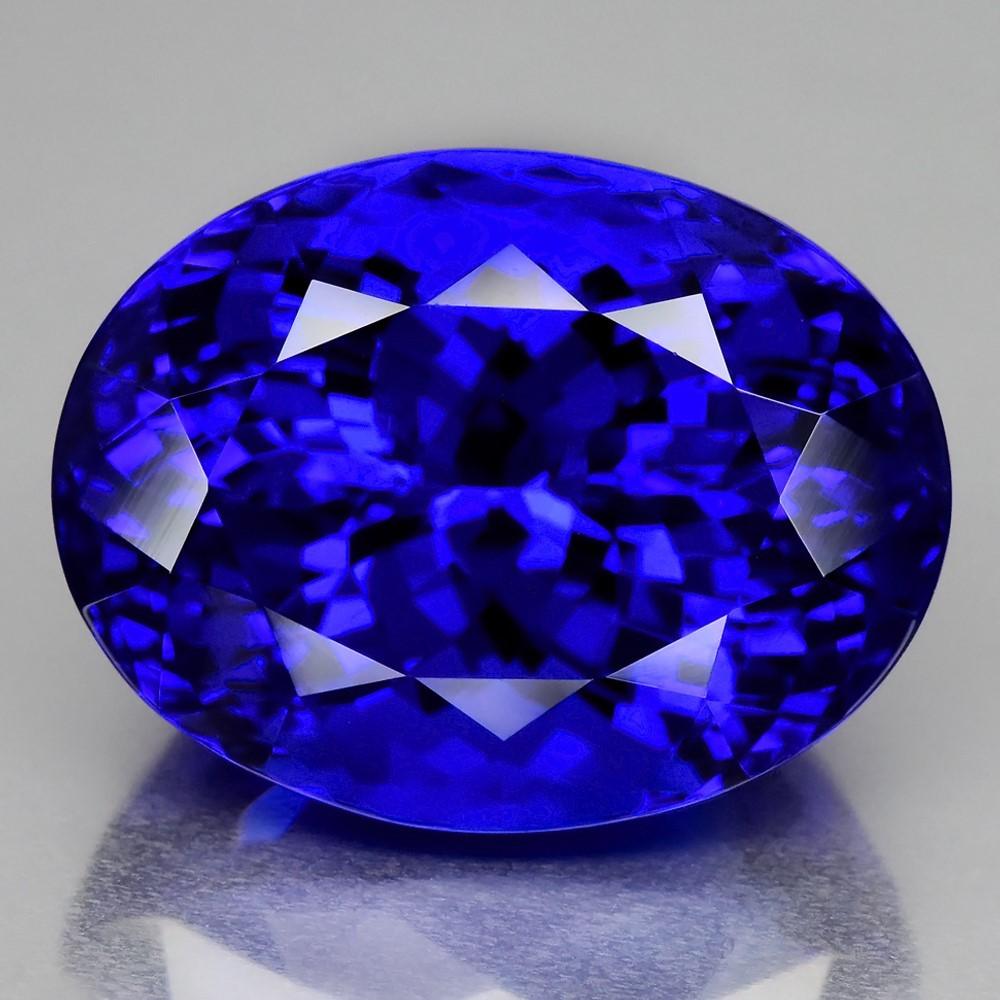
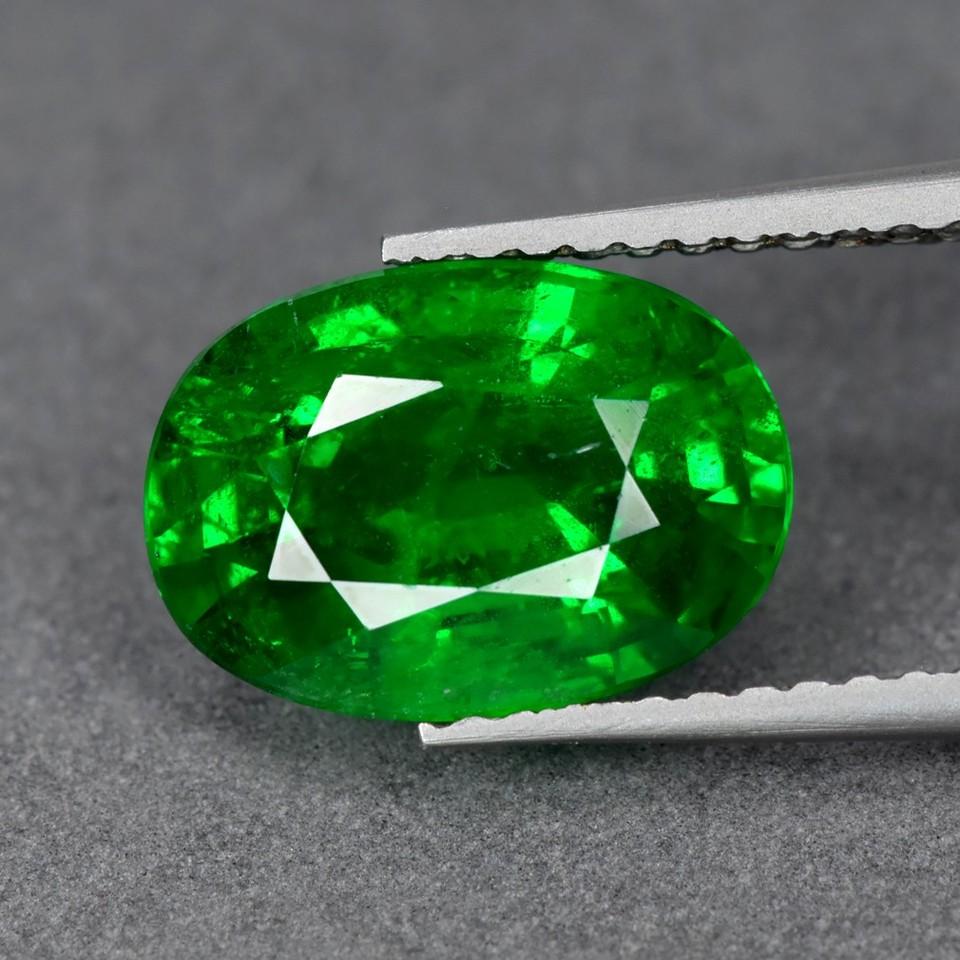
Two remarkable gemstones are among the treasures associated with this geological history: Tanzanite, with its captivating blue-violet colour, and Tsavorite, celebrated for its brilliant green.
Although they belong to different mineral families and formed under different conditions, both are closely tied to East Africa’s ancient geological history.
Their story is not simply about colour. It is a story of continental collision, metamorphism, chemical transformation and the extraordinary ability of nature to create beauty from rock.
1. The Pan-African Orogeny: An Ancient Geological Beginning
To understand the formation of Tanzanite and Tsavorite, we must travel back approximately 650–500 million years, to a major geological period known as the Pan-African orogeny.
During this period, ancient continental landmasses moved towards one another. The oceanic basin known as the Mozambique Ocean progressively closed as continental fragments collided, contributing to the assembly of the supercontinent Gondwana.
These enormous tectonic movements transformed the rocks of what is now eastern Africa.
Sediments were buried deep within the Earth’s crust, subjected to intense temperatures and pressures, folded, fractured, and chemically transformed.
This process is known as metamorphism.
The resulting geological belt, called the Mozambique Belt, extends across parts of eastern Africa and Madagascar. It contains some of the world’s most important gemstone-bearing metamorphic formations.
Northern Tanzania became part of this remarkable geological environment.
The Merelani–Lelatema region, in particular, contains mineral deposits associated with this ancient geological history.
The same broad geological landscape that hosts Tanzania’s famous Tanzanite also contains Tsavorite mineralization.
However, these gemstones did not form in the same way. Their different mineral compositions required different chemical conditions.
2. Before the Gemstones: The Rocks That Made Their Formation Possible
Before Tanzanite and Tsavorite existed, the materials that would eventually contribute to their formation were part of ancient sedimentary environments.
These included:
- Quartz-rich sands.
- Clay-rich sediments.
- Carbon-rich organic materials.
- Calcium-rich carbonate deposits.
- Magnesium-bearing sediments.
- Sulfate-rich evaporite deposits.
Over geological time, these sediments became buried and transformed into metamorphic rocks.
In the Merelani–Lelatema region, important rock types include graphite-bearing gneiss, quartzite, calc-silicate rocks, marble, and meta-evaporite-bearing formations.
Each rock type provides different chemical ingredients.
For example, graphite-bearing rocks are important sources of vanadium and chromium in some gemstone-forming systems. Carbonate and sulfate-bearing formations can contribute calcium, while silicate-rich rocks provide aluminium and silicon.
The interaction between these different rocks and mineral-bearing fluids helped create the conditions necessary for gemstone formation.
This is an important geological principle: gemstones do not develop simply because a rock experiences heat and pressure. Their formation also depends on the availability of the correct chemical elements and the reactions taking place within the surrounding geological environment.
3. The Formation of Tanzanite: The Birth of the Blue-Violet Treasure
Tanzanite is the blue-to-violet gem variety of zoisite, a calcium aluminium silicate mineral.
Its chemical formula is:
Ca₂Al₃(SiO₄)(Si₂O₇)O(OH)
Its characteristic colour is associated with vanadium incorporated into the zoisite crystal structure.
The geological journey of Tanzanite
Stage 1: Ancient vanadium-bearing sediments
The original geological materials included carbon-rich sediments containing vanadium and other trace elements.
Over time, these materials became graphite-bearing metamorphic rocks.
Stage 2: Metamorphic transformation
During the Pan-African geological events, the rocks experienced substantial heat, pressure and deformation.
Their original mineral compositions changed, and chemical elements were redistributed through metamorphic reactions.
Stage 3: Tectonic deformation and fluid movement
Folding, shearing and fracturing created pathways for mineral-bearing fluids.
These fluids interacted with the surrounding rocks, allowing elements such as calcium, aluminium, silicon and vanadium to participate in new mineral-forming reactions.
Stage 4: Zoisite crystallization
When the appropriate chemical conditions developed, zoisite crystallized.
Vanadium entered the mineral structure and contributed to the distinctive optical properties of Tanzanite.
Stage 5: Development of the blue-violet gemstone
The resulting crystals became the remarkable blue-to-violet gemstones recognized throughout the world as Tanzanite.
Scientific studies have investigated the mineral chemistry, isotopic composition and fluid inclusions of the Merelani deposit to understand this process.
The Geological Institute of America (GIA), in its 2023 review of metamorphic gemstones, discusses an estimated Tanzanite formation temperature of approximately 420°C and pressure of 2–4 kilobars.
These estimates describe the proposed crystallization conditions, not the full temperature and pressure history of the surrounding rocks.
What makes Tanzanite visually extraordinary?
Tanzanite is trichroic, meaning that it can display three different colour directions when examined along different crystallographic axes.
These colours are commonly described as:
- Blue.
- Violet.
- Brownish-yellow or yellow-green.
This phenomenon is known as pleochroism.
It is one of the reasons why cutting Tanzanite requires considerable skill. The orientation of the rough crystal influences the colour that will be most visible in the finished gemstone.
The blue-violet beauty admired in fine Tanzanite jewellery is therefore closely connected to the mineral’s internal crystal structure and chemical composition.
4. The Formation of Tsavorite: The Birth of the Green Treasure
Tsavorite has a completely different mineralogical identity.
It is the green gem variety of grossular garnet, belonging to the garnet mineral group.
Its chemical formula is:
Ca₃Al₂Si₃O₁₂
Its green colour is primarily associated with chromium, with vanadium also contributing in some specimens.
Unlike Tanzanite, which belongs to the zoisite mineral species, Tsavorite belongs to the grossular garnet species.
The geological journey of Tsavorite
Stage 1: Calcium-rich and aluminium-bearing source materials
The ancient sedimentary environment contained carbonate-rich rocks, silicate materials, graphite-bearing sediments and sulfate-rich evaporite deposits.
These materials eventually became part of the metamorphic rock sequence.
Stage 2: Metamorphism and chemical transformation
As the rocks were buried and subjected to geological heat and pressure, their original minerals reacted and recrystallized.
Calcium, aluminium and silica became available for reactions that could produce grossular garnet.
Stage 3: The importance of evaporite deposits
One particularly interesting aspect of Tsavorite formation is the proposed contribution of ancient sulfate-rich evaporite deposits.
An important mineral in this geological model is anhydrite, a calcium sulfate mineral.
Anhydrite can provide calcium for the formation of grossular garnet when it participates in suitable metamorphic and metasomatic reactions involving aluminium- and silica-bearing materials.
Research also highlights the importance of fluid movement and chemical exchange between graphite-bearing gneiss and neighbouring carbonate-rich rocks.
Stage 4: Grossular crystallization
When the required chemical elements came together under favourable geological conditions, grossular garnet crystallized.
Chromium and vanadium entered the crystal structure and contributed to the development of its green colour.
Stage 5: Development of Tsavorite deposits
The resulting Tsavorite occurs in different geological settings, including nodules, veins and lenses within metamorphic rocks.
Research from Lemshuku, in the Merelani area, describes Tsavorite occurring in quartz veins associated with graphite-bearing gneiss, pyrite and other minerals.
The geological structures and chemical composition of the surrounding rocks played important roles in determining where these gemstones developed.
5. Two Gemstones, Different Geological Conditions
Although Tanzanite and Tsavorite are connected to the same broad ancient geological history, they have different mineral structures and formation requirements.
This is one of the most fascinating aspects of their relationship.
| Geological characteristic | Tanzanite | Tsavorite |
|---|---|---|
| Mineral species | Zoisite | Grossular garnet |
| Gemstone family | Zoisite | Garnet |
| Chemical formula | Ca₂Al₃(SiO₄)(Si₂O₇)O(OH) | Ca₃Al₂Si₃O₁₂ |
| Characteristic colour | Blue-violet | Green |
| Important colour elements | Vanadium | Chromium and vanadium |
| Approximate temperature in GIA geological model | 420°C | Host formations reached approximately 600–750°C |
| Approximate pressure in GIA geological model | 2–4 kbar | Host formations reached approximately 6–9.1 kbar |
These temperature and pressure figures require careful interpretation.
The Tanzanite values represent proposed crystallization conditions. The Tsavorite figures refer to metamorphic conditions estimated for the formations containing Tsavorite, rather than a universal measurement of the precise moment every Tsavorite crystal formed.
The distinction is important because geological deposits can experience several stages of metamorphism, fluid movement and mineral growth.
Nevertheless, the comparison illustrates how different geological environments within the same broad region can produce entirely different gemstones.
6. The Merelani–Lelatema Connection: One Geological Landscape, Different Treasures
The Merelani–Lelatema region of northern Tanzania is particularly significant in the study of both gemstones.
It forms part of the Mozambique Belt and contains tightly folded metamorphic rocks, graphite-bearing formations, quartz veins, marble and calc-silicate rocks.
These geological formations provided different environments for gemstone mineralization.
At Merelani, Tanzanite occurs in pockets and lenses within the metamorphic rock sequence.
Tsavorite is also documented in the Merelani area, as well as in nearby Lemshuku and Namalulu.
Research at Lemshuku has shown that Tsavorite mineralization is strongly controlled by two factors:
Lithology: The original composition and arrangement of the rocks.
Structure: The folding, shearing and fracturing that created favourable locations for mineral-bearing fluids and crystallization.
This explains why two gemstones can be found within the same broad geological region without necessarily occurring in the same individual rock or forming at the same time.
The landscape provided multiple geological environments, each capable of producing different mineral treasures.
7. Approximately 600 Million Years Ago: A Shared Geological Chapter
One of the most fascinating findings comes from a 2017 scientific study by Giuliani and colleagues.
The researchers investigated the age and origin of mineralizing fluids associated with Tsavorite and Tanzanite in the Neoproterozoic Mozambique Metamorphic Belt.
Using isotopic analysis, fluid-inclusion studies, and other geological evidence, they established that certain Tanzanite and Tsavorite occurrences hosted in quartz veins and lenses at Merelani formed approximately 600 million years ago.
This mineralization was associated with a retrograde metamorphic episode during the East African Orogeny.
This finding provides important evidence of a shared geological chapter in the history of these gemstones.
However, it does not mean that every Tanzanite and Tsavorite deposit throughout East Africa formed simultaneously or that all their crystals have the same geological age.
What it demonstrates is that certain occurrences of both gemstones at Merelani are connected to the same ancient period of regional geological transformation.
For gemstone enthusiasts, this is an extraordinary connection: two different mineral species, with two distinct colours and chemical compositions, preserve evidence of a common geological history.
8. Why Tanzania Is So Important to the World of Gemstones
Tanzania occupies a remarkable position in the international coloured gemstone industry.
Tanzanite is particularly exceptional because its established commercial source is restricted to the Merelani Hills.
Tsavorite, meanwhile, is found in several East African localities, including Tanzania and Kenya.
Together, these gemstones demonstrate the extraordinary mineral diversity of the Mozambique Belt.
They also represent an opportunity to tell the world a deeper story about Tanzania.
A gemstone is not simply a beautiful object extracted from the ground. It is the result of complex geological processes that took place over immense periods of time.
Understanding those processes adds another dimension to its value.
For Tanzania, this geological heritage is a source of scientific interest, cultural significance, craftsmanship, and economic opportunity.
9. From Geological Formation to Fine Jewellery
The journey of these gemstones does not end with their formation.
After recovery from the ground, rough crystals undergo careful examination, evaluation, cutting and polishing.
For Tanzanite, the lapidary must consider its pleochroism, clarity, colour distribution and cleavage.
For Tsavorite, attention is given to colour, transparency, inclusions, proportions and the preservation of the rough crystal’s weight.
Each gemstone requires a different approach.
Once cut and polished, these natural minerals can be transformed into fine jewellery, where the skill of the craftsman brings out their individual character.
At Exclusive Tanzanite, we appreciate the complete journey of a gemstone: from its geological origins in Tanzania to the craftsmanship that transforms it into something to be treasured for generations.
10. Two Colours. One Ancient Geological Legacy.
Tanzanite and Tsavorite tell two different stories through their colours.
One reflects the captivating blue-violet beauty of vanadium-bearing zoisite.
The other reveals the vibrant green of chromium-bearing grossular garnet.
Yet both are connected to the ancient geological processes that shaped East Africa.
Approximately 600 million years ago, the geological forces of the Pan-African orogeny were transforming the rocks of what is now northern Tanzania.
Through metamorphism, deformation, chemical reactions and the movement of mineral-bearing fluids, extraordinary gemstones developed within this ancient landscape.
Today, these gemstones travel from the geological formations of East Africa into the hands of collectors, designers and jewellery lovers around the world.
Their beauty is immediate. Their geological history is extraordinary.
Tanzanite — The Blue Treasure of Tanzania.
Tsavorite — The Green Treasure of East Africa.
Two remarkable gemstones. Different mineral identities. A shared ancient geological heritage.
EXCLUSIVE TANZANITE
Guardians of a Geological Legacy.
Discover the beauty, science and heritage of Tanzanian gemstones at www.exclusivetanzanite.com.
Scientific References and Further Reading
- Giuliani, G. et al. (2017). Age and Origin of the Tsavorite and Tanzanite Mineralizing Fluids in the Neoproterozoic Mozambique Metamorphic Belt. The Canadian Mineralogist, 55(4), 763–786.
- GIA (2023). Gems Formed in Metamorphic Rocks. Gems & Gemology. A useful comparative geological review of Tanzanite and Tsavorite.
- Feneyrol, J. et al. (2010). Lithostratigraphic and Structural Controls of Tsavorite Deposits at Lemshuku, Merelani Area, Tanzania. Comptes Rendus Geoscience, 342, 778–785.
- Malisa, E. P. (2005). Petrography and Mineral Chemistry of the Pelitic and Semi-Pelitic Gneisses of the Merelani Tanzanite Mining Area, Northeastern Tanzania. Tanzania Journal of Science.
- Giuliani and colleagues’ research on the mineralization and geological evolution of the Merelani gemstone deposits.
[…] Read our geological comparison of Tanzanite and Tsavorite […]