

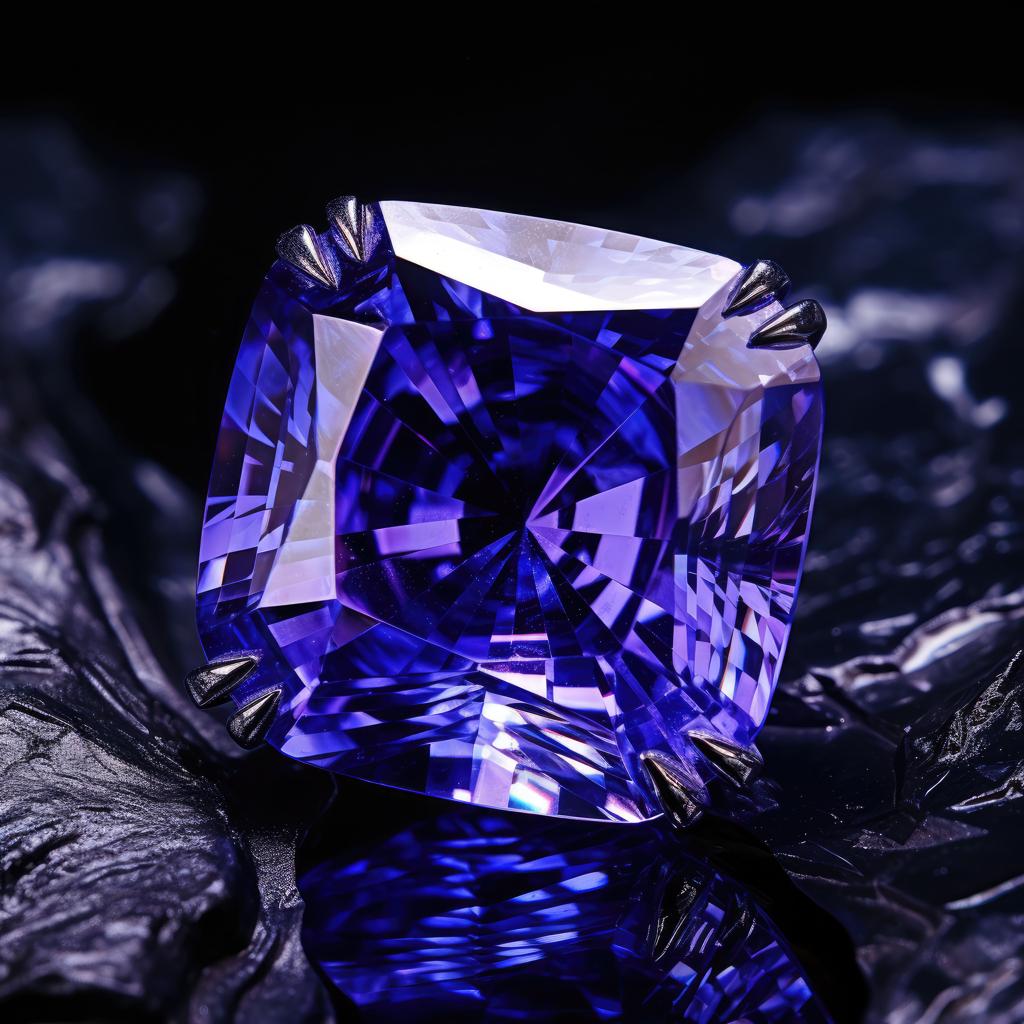
From its geological birth beneath the hills of Merelani to its transformation into fine jewellery, discover the science, history, beauty and craftsmanship behind one of the world’s most distinctive coloured gemstones.
There are gemstones that attract attention because of their brilliance, others because of their rarity, and some because of the stories attached to their origins. Tanzanite brings these qualities together in a remarkable way.
Its blue-violet colour is captivating, but its true fascination goes much deeper. Tanzanite is a natural mineral with a distinctive crystal structure, a remarkable ability to display different colours from different directions, and a geological history connected to the ancient rocks of East Africa.
It is also exceptional because gem-quality Tanzanite is commercially mined in one known locality: the Merelani Hills of northern Tanzania.
To understand Tanzanite is to explore several subjects at once: geology, mineralogy, chemistry, optics, gem cutting, jewellery craftsmanship, and the human story behind its discovery.
This guide brings these subjects together to answer the most important questions about Tanzanite.
1. What Is Tanzanite?
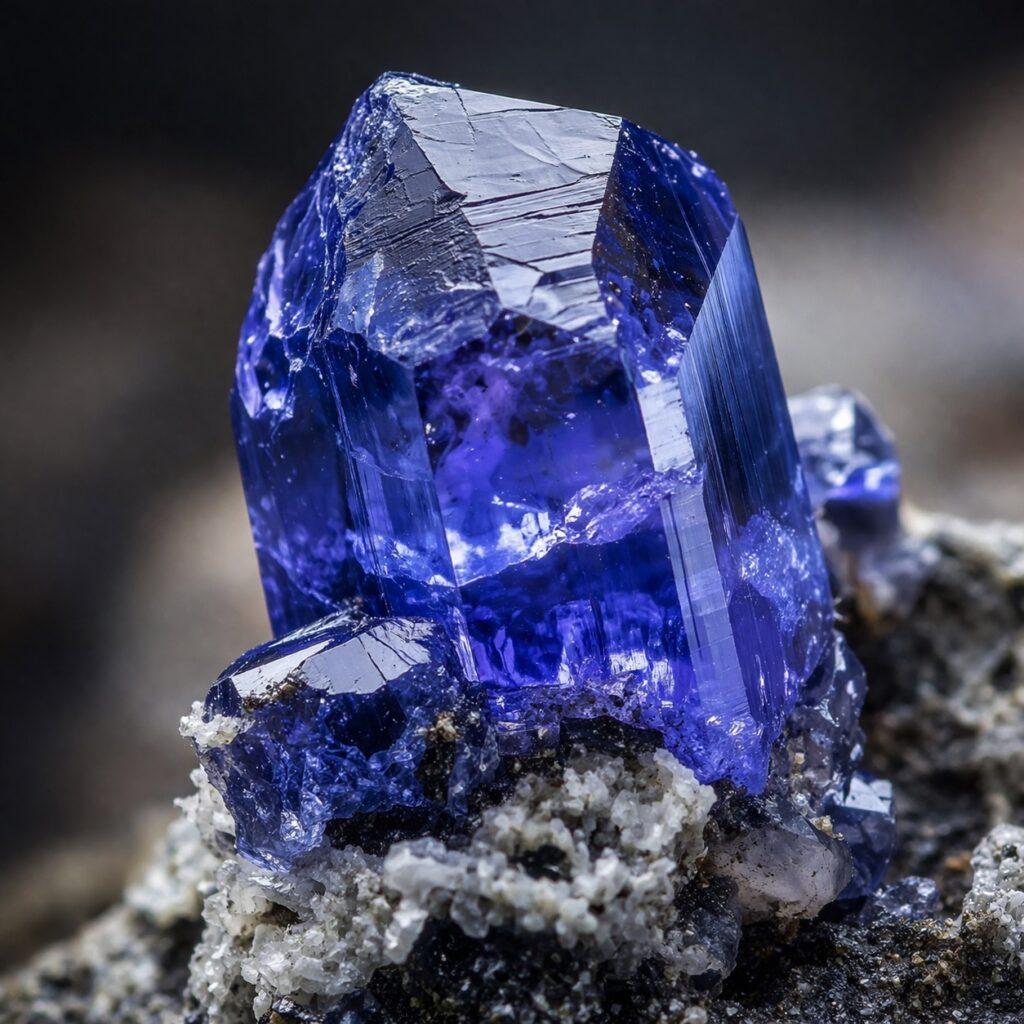
Tanzanite is the blue-to-violet gem variety of the mineral zoisite, a calcium aluminium silicate.
Its recognised mineral name is zoisite, while Tanzanite is the trade name used for its distinctive blue-violet gem variety.
Its chemical formula is:
Ca₂Al₃(SiO₄)₃(OH)
The formula describes the mineral’s main chemical constituents: calcium, aluminium, silicon, oxygen and hydrogen. Trace elements, particularly vanadium, play an important role in its characteristic colour.
Tanzanite belongs to the orthorhombic crystal system. This means its internal crystal structure has three mutually perpendicular axes of different lengths.
That internal arrangement is important because it influences how light travels through the gemstone and helps explain its unusual optical behaviour.
Unlike many gemstones that are valued mainly for a single dominant colour, Tanzanite can reveal different colour components when viewed from different directions.
In simple terms: Tanzanite is a naturally occurring blue-violet variety of zoisite, recognised for its distinctive colour, strong pleochroism and unique geographical origin.
2. Where Is Tanzanite Found?
The established commercial source of gem-quality Tanzanite is the Merelani Hills, in the Lelatema Mountains of northern Tanzania, near the city of Arusha and the foothills of Mount Kilimanjaro.
This limited geographical occurrence is one of the gemstone’s most important characteristics.
Zoisite as a mineral occurs in various parts of the world. However, the distinctive blue-violet material known as Tanzanite is commercially associated with the Merelani mining area.
The Merelani region is geologically complex. Its rocks contain evidence of ancient sedimentation, metamorphism, deformation, and later geological processes that helped create conditions for gemstone formation.
The gemstone is found in a geological environment involving metamorphosed carbonate-rich and silicate-rich rocks, graphite-bearing gneisses, quartz veins, fractures and other mineralised structures.
The relationship between these rocks and the mineralising processes is an important subject of continuing geological research.
Why does the location matter?
The connection between Tanzanite and Merelani gives the gemstone a geographical identity.
A gemstone’s origin is not simply a point on a map. It can be part of its scientific identity, cultural heritage and commercial story.
When someone purchases Tanzanite, they are acquiring a gemstone whose established commercial source is closely connected to one particular region of Tanzania.
3. How Was Tanzanite Discovered?
The modern discovery of Tanzanite dates to 1967.
The first discovery is commonly credited to a Maasai tribesman named Ali Juuyawatu, who encountered unusual blue-violet crystals in the Merelani area.
The discovery brought international attention to a gemstone that had not previously been established in the global jewellery market.
Tiffany & Co. played an important role in introducing the gemstone to international consumers and promoting the name Tanzanite, chosen in recognition of Tanzania, the country of its origin.
The name helped establish a strong connection between the gemstone and its birthplace.
Today, Tanzanite is internationally recognised as one of Tanzania’s most distinctive natural treasures.
Its story is not only about a gemstone entering the jewellery market. It is also about a geological discovery that brought global attention to the mineral wealth of northern Tanzania.
4. How Was Tanzanite Formed?
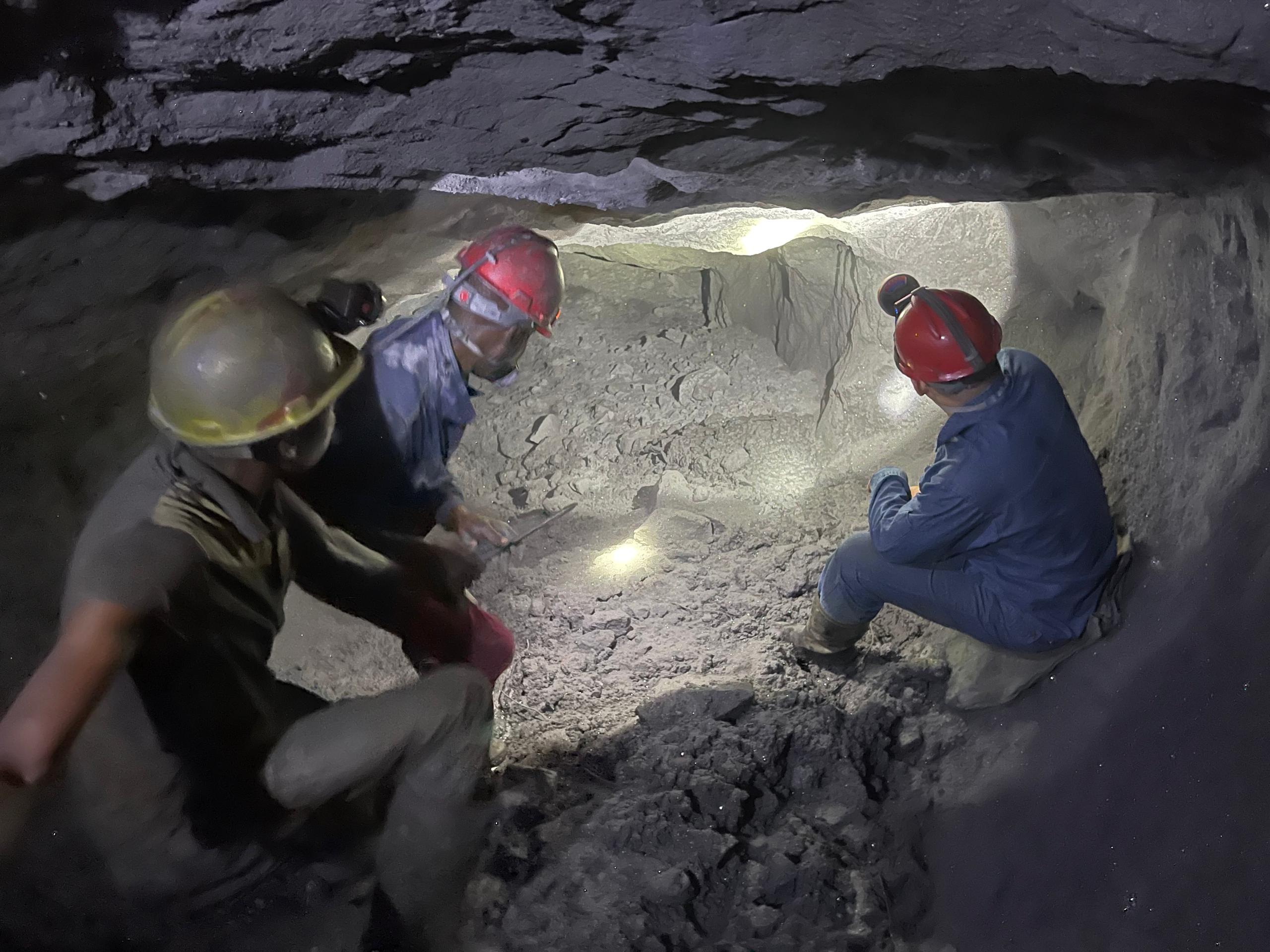
Tanzanite formed through geological processes that took place deep within the Earth’s crust.
The Merelani region belongs to the ancient metamorphic terrain of the Mozambique Belt, part of the wider geological history associated with the East African Orogeny.
Read our geological comparison of Tanzanite and Tsavorite
The rocks in this region have experienced substantial geological change over hundreds of millions of years.
To understand the formation of Tanzanite, it helps to understand metamorphism.
What is metamorphism?
Metamorphism is the process through which existing rocks are transformed by changes in temperature, pressure, and chemically active fluids without completely melting the rocks.
As conditions change, minerals may become unstable and react to form new minerals.
This can happen when sedimentary or older metamorphic rocks are buried deeply within the Earth’s crust and exposed to elevated temperatures and pressures.
The geological environment of Merelani
Research on the Merelani-Lelatema region identifies a variety of rock types, including:
- Graphite-bearing gneisses.
- Quartz-rich and silicate-rich rocks.
- Calc-silicate rocks.
- Crystalline carbonate rocks and marbles.
- Pegmatitic veins and quartz-bearing structures.
- Metamorphosed sedimentary rocks.
These rocks preserve evidence of complex metamorphic and structural histories.
During geological deformation, fractures, folds, and mineralised zones developed. Chemical reactions between existing minerals and locally available fluids also contributed to the formation of new mineral assemblages.
Tanzanite occurs in particular mineralised pockets, veins and lenses within this geological environment.
How old is Tanzanite?
The geological history of its host rocks is ancient, and scientific research has investigated the timing of gemstone mineralisation.
A 2017 study by Giuliani and colleagues reported an age of approximately 600 million years for Tanzanite and Tsavorite hosted in certain quartz veins and lenses at Merelani.
This age relates to the studied mineralisation and its geological setting. It should not be interpreted as a precise date for every Tanzanite crystal or every occurrence in the region.
The research connects this mineralisation to a retrograde metamorphic episode associated with the East African Orogeny.
The result is a remarkable connection between a modern gemstone market and geological events that took place hundreds of millions of years ago.
5. What Gives Tanzanite Its Blue and Violet Colour?
The characteristic blue-to-violet colour of Tanzanite is principally associated with trace amounts of vanadium in the zoisite crystal structure.
Vanadium is a chemical element that can occur in different oxidation states. Its electronic behaviour influences which wavelengths of visible light are absorbed.
When certain wavelengths are absorbed more strongly than others, the remaining transmitted or reflected light produces the colour that our eyes perceive.
This is why trace elements can have such a powerful effect on the appearance of gemstones, even when they are present in very small quantities.
In Tanzanite, vanadium-related absorption is central to the gemstone’s characteristic blue-violet colour.
The precise appearance of an individual stone also depends on its crystal orientation, colour intensity, treatment history, cutting, and lighting environment.
6. What Is Tanzanite Trichroism?
One of Tanzanite’s most fascinating characteristics is trichroism.
Trichroism is a form of pleochroism in which a gemstone can show three different colour components when viewed along its three principal optical directions.
Tanzanite is strongly pleochroic. Depending on the specimen and its orientation, the colours can include:
- Blue.
- Violet or reddish-violet.
- Yellow-green, greenish or brownish tones.
These colours are not separate layers inside the gemstone. They result from the way light interacts with the crystal’s internal structure.
Because zoisite is optically anisotropic, light travelling in different crystallographic directions can experience different absorption.
The result is a gemstone that can reveal different colour appearances as it is rotated.
Why is this important?
Trichroism is one of the reasons cutting Tanzanite requires specialist knowledge.
A cutter must study the rough crystal’s orientation and decide how to position it before fashioning the final gemstone.
The decision affects which colours will be most visible when the finished stone is viewed from the front.
A carefully oriented Tanzanite may display a desirable balance of blue and violet, while a different orientation may emphasise another colour component.
This is one reason two Tanzanites of similar weight can have noticeably different face-up appearances.
7. Why Does Tanzanite Look Different Under Different Lighting?
Tanzanite can appear more blue in one environment and more violet in another.
This is partly because different light sources contain different distributions of visible wavelengths.
For example:
- Cool daylight-equivalent lighting may emphasise blue tones.
- Warm incandescent lighting may bring out more violet or purple.
- Rotating the gemstone can reveal different pleochroic colour components.
- The colour temperature and intensity of the light can influence how saturated or bright the gemstone appears.
The gemstone itself has not necessarily changed. What has changed is the light reaching the eye and the direction from which the crystal is being viewed.
This is why examining Tanzanite under more than one lighting condition is useful when selecting a gemstone.
A photograph taken under a single light source cannot always communicate the full character of the stone.
8. Is Tanzanite Naturally Blue?
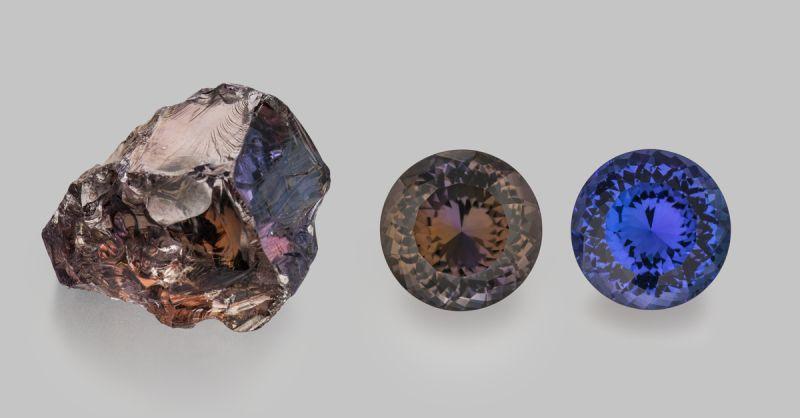
Tanzanite is a natural gemstone, but much of the commercially available blue-violet material has undergone heat treatment.
Untreated rough zoisite may display brownish, yellow-green, greyish, or other less commercially desirable colour components.
Controlled heating can modify the colour and commonly produces the blue-to-violet appearance associated with Tanzanite.
Some natural material may already show attractive blue-violet colour, but heat treatment is an established practice in the trade.
It is important to distinguish between a natural gemstone and a treated natural gemstone.
A heat-treated Tanzanite is still natural Tanzanite. Its mineral origin has not changed; its colour has been modified through treatment.
9. What Happens When Tanzanite Is Heated?
Heat treatment is used to modify the colour of suitable Tanzanite rough.
Scientific research has investigated the changes in colour and vanadium behaviour that occur during heating.
A 2020 study published in Molecules, titled Cause of Color Modification in Tanzanite after Heat Treatment, examined Tanzanite samples using gemological and spectroscopic techniques.
The researchers observed changes in optical absorption and the colour appearance of the heated material.
In practical gem trade terms, heating commonly reduces the visibility of brownish or yellow-green colour components and brings out more desirable blue-violet tones.
The exact result depends on the starting material and treatment conditions.
Does heating make Tanzanite fake?
No.
A natural Tanzanite that has been heat-treated remains a natural gemstone.
Treatment is an enhancement, not a change in the gemstone’s mineral identity.
The important requirement is honest disclosure of any known treatment.
Is heat treatment permanent?
The colour modification produced by conventional Tanzanite heat treatment is generally considered stable under normal wearing conditions.
However, the gemstone should not be exposed to very high temperatures or sudden temperature changes.
10. What Is the Difference Between Tanzanite and Zoisite?
Zoisite is the mineral species. Tanzanite is the blue-to-violet gem variety of that mineral.
Zoisite can occur in several colours, including colourless, grey, brown, green, pink and yellowish varieties.
The name Tanzanite is conventionally reserved for the distinctive blue-to-violet material.
This distinction matters because not every coloured zoisite should automatically be called Tanzanite.
The correct mineral identification and trade name depend on the material’s actual characteristics.
11. What Are the Physical and Gemological Properties of Tanzanite?
Gemologists use physical and optical properties to identify and study Tanzanite.
The following are commonly cited reference values:
| Property | Tanzanite |
|---|---|
| Mineral species | Zoisite |
| Gem variety | Blue-to-violet zoisite |
| Chemical formula | Ca₂Al₃(SiO₄)₃(OH) |
| Crystal system | Orthorhombic |
| Colour | Blue, violet-blue, blue-violet, violet |
| Refractive index | Approximately 1.691–1.700 |
| Birefringence | Approximately 0.008–0.013 |
| Specific gravity | Approximately 3.35 |
| Mohs hardness | 6–7 |
| Optical character | Biaxial |
| Pleochroism | Strong, commonly trichroic |
| Lustre | Vitreous |
| Cleavage | Perfect in one direction |
These figures are reference ranges, not a substitute for laboratory testing.
What does hardness 6–7 mean?
The Mohs scale measures a mineral’s resistance to scratching relative to other minerals.
Tanzanite has a hardness of approximately 6–7. This means it is harder than materials such as glass, but softer than sapphire, ruby, and diamond.
Hardness should not be confused with toughness.
What is cleavage?
Cleavage is the tendency of a mineral to break along particular internal crystallographic planes.
Tanzanite has perfect cleavage in one direction. A sufficiently strong impact can therefore cause it to split or chip.
This is an important consideration when designing jewellery and deciding how a gemstone should be worn.
12. Why Is Tanzanite Difficult to Cut?
Cutting Tanzanite is a specialised skill because the cutter must consider more than the shape of the finished gemstone.
The rough crystal’s natural colour directions, clarity, fractures, inclusions and potential weight retention all influence the cutting plan.
The cutter must decide how to orient the rough material to achieve an attractive face-up appearance.
The importance of orientation
A cutter may choose to emphasise blue, violet or a balanced blue-violet appearance.
Different orientations can produce different results.
The decision also affects the amount of material retained. A cut that prioritises one colour may sacrifice more weight than another.
Faceting and brilliance
Faceting creates a series of carefully positioned flat surfaces that interact with incoming light.
The angles, proportions and symmetry influence how light moves through the gemstone.
A well-executed cut can improve the stone’s brightness and visual balance, while poor proportions may produce a dull or uneven appearance.
Why craftsmanship matters
A beautiful Tanzanite is not simply the result of a naturally attractive crystal.
It is also the result of informed decisions made during planning, cutting, polishing, and setting.
The cutter’s objective is to reveal the best possible appearance while respecting the limitations of the natural material.
13. What Determines the Quality and Value of Tanzanite?
The value of Tanzanite is influenced by several characteristics.
The most important considerations include colour, clarity, cut and carat weight.
These factors should be assessed together rather than in isolation.
Colour
Colour is one of the most important value factors.
Deep, saturated violet-blue and blue-violet colours are highly sought after.
Paler material is also used in jewellery, but generally has a different market position.
The colour should be assessed face-up, under appropriate lighting, and with consideration of the gemstone’s size and cut.
Clarity
Clarity describes the presence and visibility of internal characteristics and surface-reaching features.
Eye-visible inclusions may reduce the beauty and value of a Tanzanite, particularly if they affect transparency or durability.
Fractures that threaten the stone’s integrity are especially important.
Not every inclusion is necessarily a defect. Natural gemstones commonly contain internal characteristics that reflect their geological history.
Cut
Cut refers to the gemstone’s proportions, symmetry, facet arrangement, and overall finish.
A well-cut Tanzanite should display attractive colour distribution and lively light return.
A poor cut can make even a strongly coloured gemstone appear less attractive.
Carat weight
Carat is a unit of weight, not a direct measurement of a gemstone’s physical size.
One carat equals 0.2 grams.
Larger Tanzanites with strong colour can be especially desirable. However, size alone does not determine quality.
A smaller gemstone with excellent colour and cutting may be more attractive than a larger stone with weak colour or poor proportions.
Are AAA, AA and A official Tanzanite grades?
No universally accepted industry-wide grading scale establishes AAA, AA and A as official Tanzanite grades.
Individual sellers and businesses may use these terms as internal descriptions of their own product ranges.
Customers should ask what the seller means by each grade and which measurable characteristics support the description.
For a meaningful comparison, discuss colour, clarity, cut, weight, treatment and any available laboratory documentation.
14. Is Blue Tanzanite Rarer Than Violet Tanzanite?
Blue and violet are both important components of Tanzanite’s colour character.
GIA explains that predominantly blue face-up stones can be rarer because the blue component is often associated with a crystal direction that can be more difficult to present in a larger finished gemstone without sacrificing weight.
A cutter may have to choose between retaining more weight in a predominantly violet stone or producing a smaller stone with a stronger blue face-up appearance.
This is one reason the cutting orientation can have a significant effect on the final gemstone.
The most attractive choice depends on the individual rough crystal and the preferences of the buyer.
15. What Shapes Are Used for Tanzanite?
Tanzanite can be fashioned into many different gemstone shapes.
Common shapes include:
- Oval.
- Cushion.
- Round.
- Pear.
- Emerald cut.
- Trillion.
- Radiant.
- Marquise.
Each shape creates a different visual character.
Cushion cut
The cushion cut combines a square or rectangular outline with softened corners. It is popular for larger centre stones and classic jewellery designs.
Oval cut
The oval shape can create an elegant elongated appearance and is frequently used in rings and pendants.
Pear cut
The pear shape combines a rounded end with a pointed tip, making it suitable for pendants and distinctive rings.
Emerald cut
The emerald cut uses step-like facets that emphasise clarity, colour and geometry rather than the brilliant sparkle associated with brilliant-style cuts.
Why does shape matter?
Shape influences the overall appearance, proportions and design possibilities of a gemstone.
However, shape and cut quality are not the same thing. A gemstone can have a beautiful outline but still be poorly proportioned or unevenly faceted.
16. Is Tanzanite Rare?
Tanzanite is geographically distinctive because gem-quality material is commercially mined from one established source: Merelani in Tanzania.
This restricted source contributes to its special position in the coloured gemstone market.
Its rarity should be understood in the context of geological availability, quality, size and market supply.
Not every piece of rough material produces a transparent, attractive gemstone suitable for fine jewellery.
The supply of desirable material is therefore influenced by more than the existence of the mineral underground.
Claims that Tanzanite is automatically rarer than every diamond should be treated cautiously. Rarity depends on what is being compared: source, quality, size, availability or market category.
What makes Tanzanite exceptional is its distinctive combination of geographical origin, colour and optical properties.
17. Is Tanzanite More Valuable Than Sapphire?
There is no universal answer.
Tanzanite and sapphire are different gemstones with different geological origins, physical properties, market histories and supply conditions.
The value of either gemstone depends on its quality, size, colour, clarity, cut, treatment, origin documentation, and market demand.
Fine blue sapphires can command very high prices, while exceptional Tanzanites can also be valuable.
A fair comparison must consider the actual stones being compared rather than the gemstone names alone.
18. Can Tanzanite Be Lab-Grown or Imitated?
A distinction must be made between a natural gemstone, a laboratory-grown gemstone, and an imitation.
A natural Tanzanite forms through geological processes in the Earth.
A laboratory-grown gemstone would be produced artificially with essentially the same mineral composition and crystal structure.
An imitation is a different material used to resemble the appearance of another gemstone.
Blue-violet glass and certain other gemstones or manufactured materials can be used to imitate Tanzanite.
GIA’s consumer information explains the distinction between natural, synthetic, and imitation materials.
Synthetic Tanzanite is not an established commercial category in the same way as synthetic corundum or synthetic emerald. Nevertheless, the identity of an individual stone should be established through appropriate gemological testing rather than assumptions based on its appearance.
A professional gemologist or recognised laboratory can help determine what a gemstone actually is.
19. How Can You Identify Genuine Tanzanite?
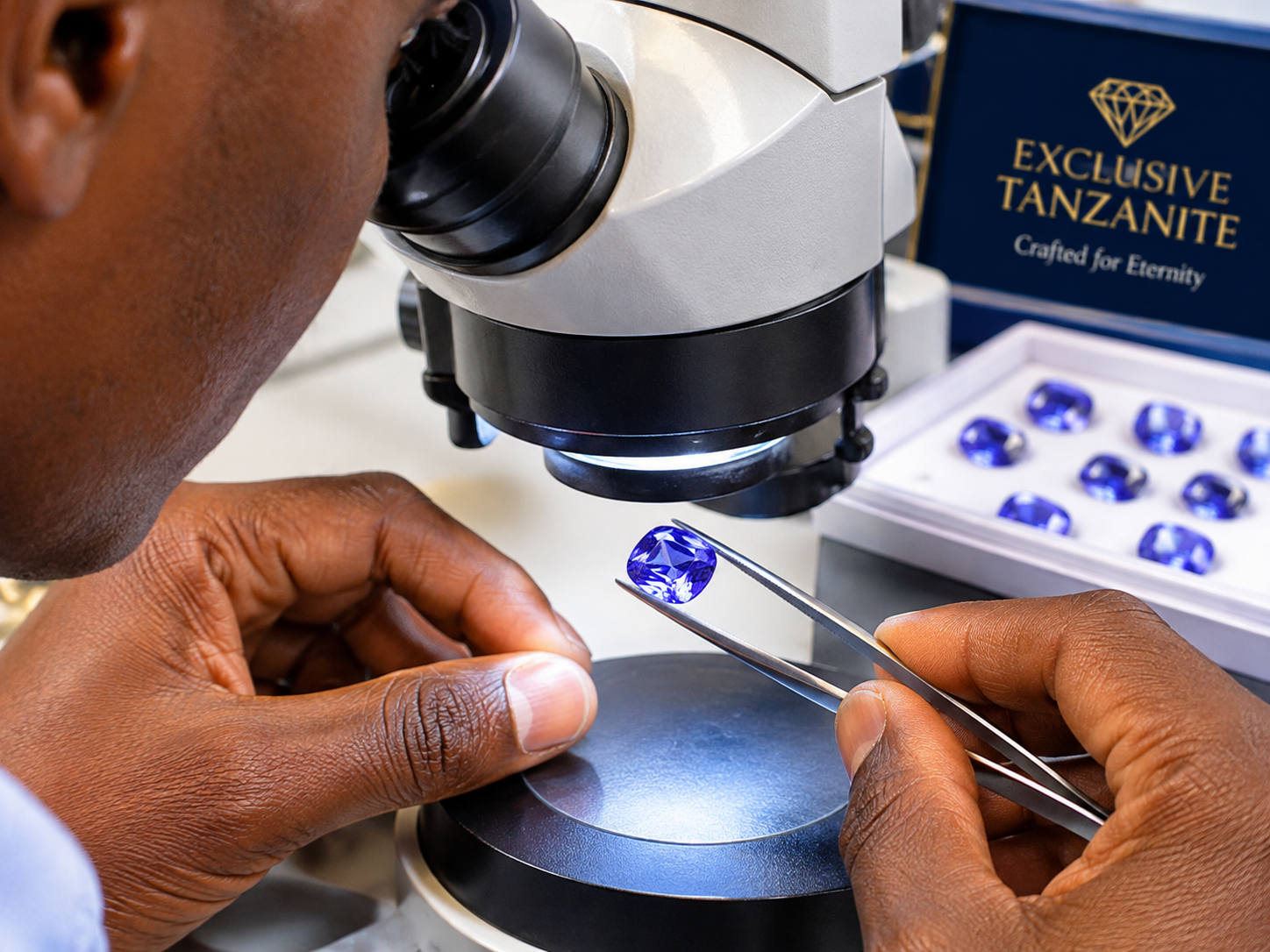
Appearance alone cannot provide absolute proof that a gemstone is natural Tanzanite.
Gemologists use a combination of observations and tests.
Refractive index
Tanzanite has a refractive index of approximately 1.691–1.700.
A refractometer can help determine whether a specimen is consistent with the expected optical properties.
Specific gravity
Tanzanite has a specific gravity of approximately 3.35.
Hydrostatic weighing can help measure this property.
Pleochroism
A dichroscope can help examine the different colours visible in different optical directions.
Strong pleochroism is an important identifying feature.
Microscopic examination
A gemologist may examine inclusions, fractures, growth features and other internal characteristics under magnification.
Spectroscopy
Advanced laboratory methods can provide further information about a gemstone’s absorption characteristics and chemical behaviour.
No single observation should be treated as conclusive in every case.
For valuable purchases, independent laboratory identification provides additional confidence.
20. Does Tanzanite Come with a GIA Certificate?
GIA evaluates Tanzanite and can issue a Colored Stone Identification Report.
A GIA report can provide information such as:
- Whether the material is natural or laboratory-grown.
- The gemstone’s identification.
- Its weight and measurements.
- Its shape and cutting style.
- Its colour.
- Any detectable treatments.
It is important to understand that GIA does not assign Tanzanite a universal commercial grade such as AAA or AA.
A laboratory identification report is different from a seller’s quality description or an insurance valuation.
Customers should also understand that a laboratory report does not automatically establish the complete mine-to-market chain of custody.
If origin or provenance is important, ask what documentation supports the stated source.
21. What Treatments Can Tanzanite Receive?
Heat treatment is the established enhancement most commonly associated with Tanzanite.
Other treatments, although less common, may include:
Surface coatings: Some stones may receive coatings intended to modify colour or appearance. Coatings can be damaged through wear and are not equivalent to conventional heat treatment.
Fracture filling: Materials may be introduced into fractures to improve apparent clarity. This is uncommon in Tanzanite, and filled areas may require special care.
Treatment disclosure is important because different processes can affect appearance, durability, maintenance and marketability.
A responsible seller should communicate known treatments clearly and avoid presenting treated material as untreated.
22. How Should Tanzanite Be Cared For?
Tanzanite is suitable for jewellery, but it requires thoughtful care.
Its Mohs hardness of 6–7 provides reasonable resistance to scratching in normal use, but its perfect cleavage and fair-to-poor toughness mean it can be damaged by hard impacts.
Cleaning
The safest general cleaning method is warm water, mild soap, and a soft brush or cloth.
Gently clean the gemstone and rinse it carefully.
What should be avoided?
- Ultrasonic cleaning.
- Steam cleaning.
- Hard knocks and impacts.
- Very high temperatures.
- Sudden temperature changes.
- Harsh cleaning methods.
Storage
Store Tanzanite separately from harder gemstones such as diamond, sapphire, and ruby to reduce the risk of scratches.
A soft pouch or padded jewellery box is suitable.
Can Tanzanite be worn every day?
It can be worn regularly with proper care, but the design and setting matter.
A Tanzanite ring receives more exposure to accidental knocks than a pendant or earrings.
For frequent wear, a protective setting can help reduce the risk of damage.
A bezel setting or a design with protective metal around vulnerable edges may be worth considering.
23. Is Tanzanite Suitable for Engagement Rings?
Yes, Tanzanite can make a beautiful engagement ring.
Its blue-violet colour offers a distinctive alternative to traditional diamond centre stones.
However, customers should understand its durability characteristics.
Because Tanzanite has perfect cleavage and is less tough than sapphire or ruby, it requires more protection from impacts.
A thoughtful design can help.
Consider:
- A protective setting.
- Secure prongs or a bezel where appropriate.
- A design that does not leave vulnerable edges exposed.
- Regular professional inspection.
- Careful wearing habits.
The best engagement ring is not only beautiful; it should also suit the wearer’s lifestyle.
24. What Jewellery Designs Work Well with Tanzanite?
Tanzanite’s colour makes it versatile in fine jewellery.
It can be paired with different precious metals and gemstones to create a range of styles.
Yellow gold
Yellow gold provides a warm contrast to Tanzanite’s cool blue-violet colour.
This combination can create a classic and luxurious appearance.
White gold
White gold creates a clean, contemporary setting that allows the gemstone’s colour to remain the main visual focus.
Rose gold
Rose gold introduces a softer, warmer contrast and can create a distinctive romantic design.
Diamonds
Diamonds can frame Tanzanite and add brilliance around the centre stone.
A halo, side-stone or three-stone design can highlight the gemstone without overwhelming it.
Sterling silver
Sterling silver can provide a more accessible setting option and works particularly well with simpler contemporary designs.
The ideal combination depends on the gemstone’s colour, size, proportions and the intended style of the jewellery.
25. Is Tanzanite a December Birthstone?
Yes. Tanzanite is recognised as one of the modern December birthstones, alongside other recognised December birthstone choices.
This makes it a meaningful gift for people born in December.
Its connection to Tanzania also gives it a special story beyond its birthstone association.
26. What Makes Tanzanite Important to Tanzania?
Tanzanite is more than a beautiful mineral.
It is a gemstone with a unique geographical identity and an important connection to Tanzania’s mineral heritage.
Its discovery brought international attention to Merelani and helped establish the country as a recognised source of a distinctive coloured gemstone.
Its story connects several parts of the country and its economy:
- Geological research and mineral exploration.
- Artisanal and industrial mining.
- Gemstone sorting and evaluation.
- Cutting and polishing.
- Jewellery design and manufacturing.
- Tourism and cultural storytelling.
- Trade and international markets.
The gemstone also creates an opportunity to communicate Tanzania’s geological heritage to the world.
When people learn about Tanzanite, they are also learning about Merelani, northern Tanzania and the geological history of East Africa.
27. From Rough Tanzanite to Fine Jewellery: The Journey
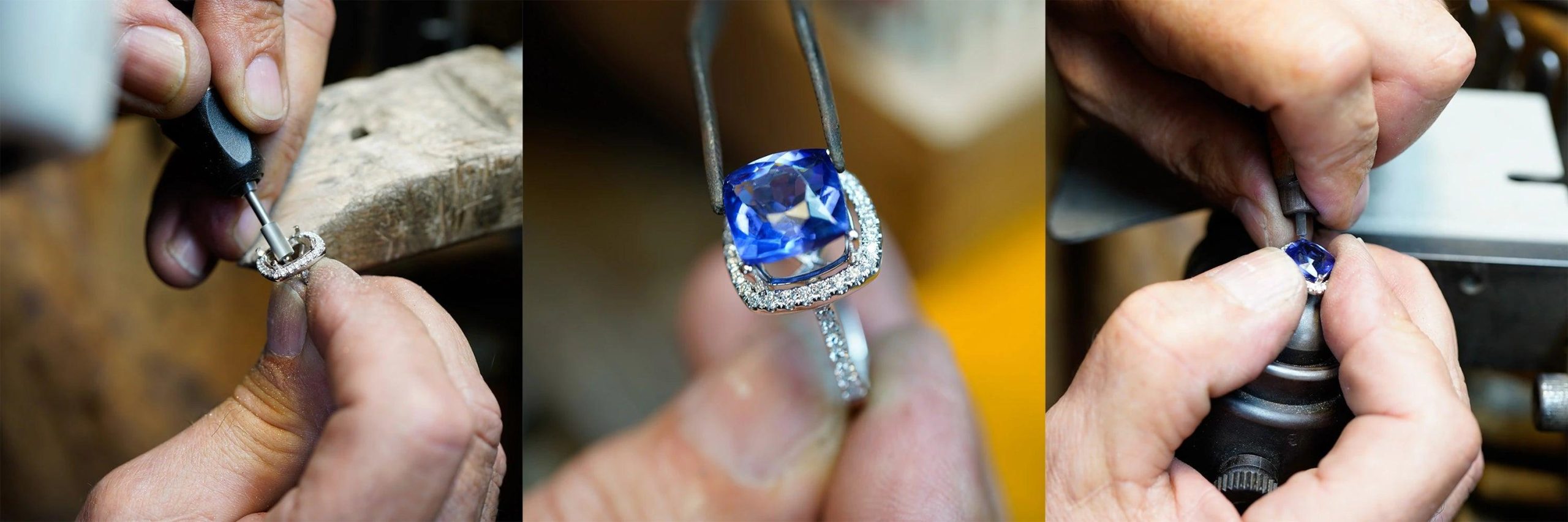
The transformation of Tanzanite from a rough crystal into fine jewellery involves several stages.
Stage 1: Geological formation
The mineral forms within a complex geological environment deep beneath the Earth’s surface.
Stage 2: Mining
The gemstone-bearing material is recovered from the mineralised zones of the Merelani area.
Mining requires technical knowledge, planning and careful handling of underground conditions.
Stage 3: Sorting and evaluation
Rough crystals are examined according to colour, transparency, fractures, inclusions, size, and potential cutting yield.
Stage 4: Cutting and polishing
The cutter determines the best orientation and shape for the material.
Facets are created and polished to reveal the gemstone’s colour and light performance.
Stage 5: Jewellery design
The finished gemstone is considered alongside the intended design, metal, setting and overall proportions.
Stage 6: Setting and finishing
A skilled jeweller prepares the mounting, secures the gemstone and finishes the piece.
The final inspection should consider the security of the setting, symmetry, polish and overall presentation.
The result is a piece of jewellery that combines natural geological material with human skill.
28. The Responsibility Behind a Precious Gemstone
Understanding a gemstone should include more than its colour and market value.
It should also involve questions about where it came from, how it was recovered, how it was processed and how it reached the customer.
Responsible gemstone businesses should aim to provide accurate product descriptions, clear treatment information, honest documentation and transparent communication about provenance.
For Tanzanite, this means recognising the importance of Merelani and the people involved in the gemstone’s journey.
The beauty of a finished gemstone should not make us forget the miners, cutters, designers and craftspeople who contribute to its transformation.
At Exclusive Tanzanite, we believe that appreciating Tanzanite means appreciating its geological origin, its natural character and the craftsmanship that brings it to life.
29. Frequently Asked Questions About Tanzanite
1. What exactly is Tanzanite?
Tanzanite is the blue-to-violet gem variety of the mineral zoisite, a calcium aluminium silicate.
2. Where does Tanzanite come from?
Its established commercial mining source is the Merelani Hills in northern Tanzania.
3. When was Tanzanite discovered?
The modern discovery dates to 1967. The first discovery is commonly credited to Maasai tribesman Ali Juuyawatu.
4. Who named Tanzanite?
Tiffany & Co. introduced the name Tanzanite to the international jewellery market in recognition of Tanzania, its country of origin.
5. What makes Tanzanite blue?
Trace amounts of vanadium and their interaction with light within the zoisite crystal structure are principally responsible for its characteristic colour.
6. Why does Tanzanite show different colours?
It is strongly pleochroic. Its internal crystal structure causes different wavelengths of light to be absorbed differently along different optical directions.
7. What are the three colours of Tanzanite?
Commonly described colour components include blue, violet or reddish-violet, and yellow-green or brownish tones. The precise appearance varies between specimens.
8. Is Tanzanite naturally trichroic?
Yes. Natural Tanzanite can display three different pleochroic colour components.
9. Why does Tanzanite sometimes look more blue and sometimes more purple?
The direction of observation and the lighting environment influence which colour components are most visible.
10. Is Tanzanite naturally blue?
Some natural material can show blue-violet colour, but much of the commercial material is heat-treated to enhance its blue-violet appearance.
11. Is heat-treated Tanzanite still natural?
Yes. Heat treatment modifies the colour of natural zoisite; it does not make the gemstone artificial.
12. Does heat treatment damage Tanzanite?
Conventional colour-enhancing heat treatment is an established practice. The resulting colour is generally stable under normal wearing conditions, although extreme heat and sudden temperature changes should be avoided.
13. Is all Tanzanite heat-treated?
Much of the commercially available blue-violet material has been heat-treated. The treatment status of an individual stone should be established and disclosed where known.
14. Is Tanzanite rarer than diamond?
Such comparisons depend on the category being considered. Tanzanite is distinctive because its established commercial source is geographically restricted to Merelani, but a blanket rarity ranking against all diamonds is misleading.
15. Is Tanzanite more valuable than sapphire?
Not automatically. Value depends on the quality, size, colour, clarity, cut, treatment, provenance, and market demand for each individual gemstone.
16. What is the hardness of Tanzanite?
It has a Mohs hardness of approximately 6–7.
17. Is Tanzanite fragile?
It needs more care than tougher gemstones such as sapphire because it has perfect cleavage and fair-to-poor toughness.
18. Can Tanzanite break?
Yes. A hard impact can cause chips, fractures, or cleavage-related damage.
19. Can Tanzanite be worn every day?
It can be worn regularly with care. Protective jewellery designs and sensible wearing habits are especially important for rings.
20. Is Tanzanite good for engagement rings?
Yes, provided the wearer understands its durability, and the ring is designed to protect the gemstone.
21. What is the best metal for Tanzanite?
Yellow gold, white gold, rose gold, and sterling silver can all complement Tanzanite. The best choice depends on the desired appearance and design.
22. Does Tanzanite scratch easily?
It is more vulnerable to scratching than sapphire, ruby, and diamond. Store it separately from harder gemstones.
23. Can Tanzanite be cleaned at home?
Yes. Warm water, mild soap, and a soft brush or cloth are the safest general cleaning methods.
24. Can Tanzanite be cleaned with an ultrasonic machine?
No. Ultrasonic cleaning is not recommended.
25. Can Tanzanite be steam-cleaned?
No. Steam cleaning is not recommended.
26. What is the best cut for Tanzanite?
There is no single best cut. The best choice depends on the rough crystal, colour orientation, clarity, weight retention, and the intended jewellery design.
27. Why is cutting orientation important?
It determines which pleochroic colours are most visible face-up and influences the appearance and weight of the finished gemstone.
28. Which is better: blue or violet Tanzanite?
Neither is universally better. Deep, attractive colour and the buyer’s preference matter. Predominantly blue face-up stones can be more difficult to produce in larger sizes.
29. Does a bigger Tanzanite always have greater value?
No. Colour, clarity, cut, and overall beauty must also be considered.
30. What does AAA Tanzanite mean?
AAA is a commercial description used by some sellers, not a universally standardised industry grade. Ask the seller to explain the criteria behind it.
31. Does GIA grade Tanzanite?
GIA evaluates Tanzanite and provides identification reports, but it does not assign it a universal commercial grade such as AAA.
32. Can GIA identify whether Tanzanite is natural?
A GIA Colored Stone Identification Report can identify whether submitted material is natural or laboratory-grown and report detectable treatments.
33. Can glass imitate Tanzanite?
Yes. Glass and other materials can imitate its blue-violet appearance. Gemological testing helps distinguish them.
34. Is synthetic Tanzanite commonly available?
Synthetic Tanzanite is not an established commercial category. Imitation materials do exist, so proper identification remains important.
35. Can Tanzanite be green, pink or yellow?
Zoisite can occur in several colours. The trade name Tanzanite is reserved for the blue-to-violet gem variety.
36. Is Tanzanite a December birthstone?
Yes. It is recognised as one of the modern December birthstones.
37. How old is Tanzanite?
A study published in 2017 dated certain Tanzanite-bearing quartz veins and lenses at Merelani to approximately 600 million years. This is a geological age for the studied mineralisation, not a universal date for every crystal.
38. Is Tanzanite found with Tsavorite?
Both gem-quality Tanzanite and green grossular garnet known as Tsavorite occur in the Merelani region. They are different minerals and do not necessarily form under identical conditions.
39. What is the difference between Tanzanite and Tsavorite?
Tanzanite is blue-violet zoisite, while Tsavorite is green grossular garnet. Their chemistry, crystal structures and optical properties are different.
40. Why should I buy Tanzanite from a knowledgeable jeweller?
A knowledgeable jeweller can explain the gemstone’s identity, colour, treatment, clarity, cutting, durability and documentation. This helps customers make informed decisions and choose a piece suited to their needs.
30. Final Thoughts: A Gemstone Born in Tanzania
Tanzanite is a remarkable meeting point between the natural world and human craftsmanship.
Its story begins deep beneath the Earth’s surface, within the ancient geological formations of northern Tanzania. It continues through the work of miners who recover the rough crystals, cutters who study their optical character, and jewellers who transform them into meaningful pieces.
Its blue-violet beauty is only one part of its identity.
Its trichroism reveals the complexity of its crystal structure. Its vanadium chemistry explains its distinctive colour. Its geological history connects it to ancient events in East Africa. Its limited commercial source gives it a geographical identity that is difficult to separate from Tanzania itself.
Every Tanzanite carries a connection to this remarkable place.
At Exclusive Tanzanite, we believe that a precious gemstone deserves to be understood as well as admired. We celebrate not only the finished beauty of Tanzanite, but also its geological origin, natural character, and the skilled hands that bring it to life.
Exclusive Tanzanite, Born of the Earth. Crafted for Eternity.
Scientific References and Further Reading
- Gemological Institute of America (GIA). Tanzanite: Gemstone Information and Buying Guide. https://www.gia.edu/tanzanite
- Gemological Institute of America (GIA). Tanzanite Care and Cleaning Guide. https://www.gia.edu/tanzanite-care-cleaning
- Harris, C., Hlongwane, W., Gule, N. & Scheepers, R. (2014). Origin of Tanzanite and Associated Gemstone Mineralization at Merelani, Tanzania. South African Journal of Geology, 117(1), 15–30.
- Giuliani, G. et al. (2017). Age and Origin of the Tsavorite and Tanzanite Mineralizing Fluids in the Neoproterozoic Mozambique Metamorphic Belt. The Canadian Mineralogist, 55(4), 763–786.
- Cause of Color Modification in Tanzanite after Heat Treatment. (2020). Molecules, 25(16), 3743. https://doi.org/10.3390/molecules25163743
- Malisa, E. P. Petrology and Lithogeochemistry of the Mineralized Tanzanite-Grossular Bearing Rocks in the Merelani-Lelatema Area, Northeastern Tanzania. Tanzania Journal of Science.